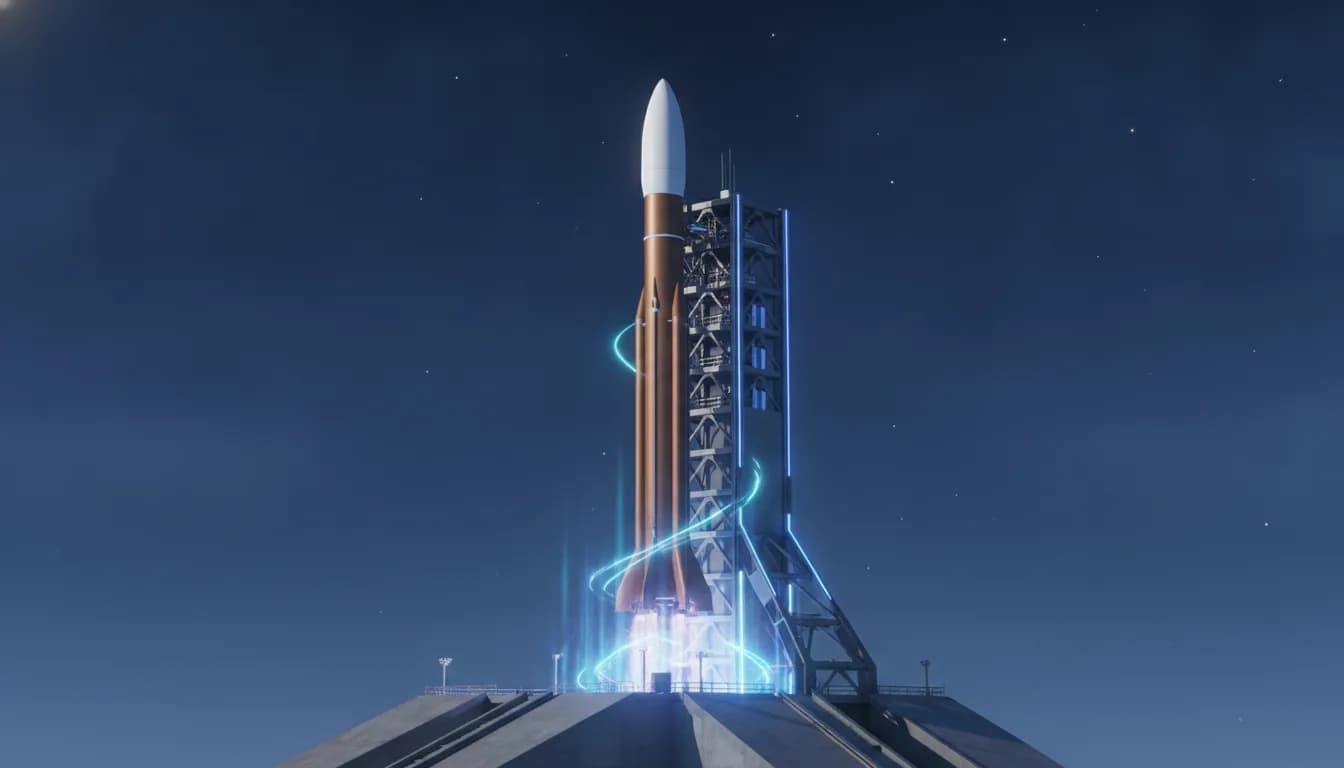
Atlas V
OperationalULA · United States · First flight 2002
One of the most reliable launch vehicles ever built: 110 flights through July 2, 2026, with a single partial failure (NROL-30, June 2007) and an unbroken run of successes since. Uses a Russian-built RD-180 main engine. ULA stopped selling Atlas V in 2021; after its final Amazon Leo launch in July 2026, the six remaining rockets are all contracted to Boeing for Starliner missions. Succeeded by Vulcan Centaur.
Launch price
Not published
Payload to LEO
18,850 kg
8,900 kg to GTO
Career record
99.1%
109/110 successful · as of 2026-10-09
Next launch
Jan 14, 2027
Starliner-1
Want to choose exactly what you get? Build your own launch alert, free with an account: GO, liftoff, success, partial failure or failure, time changes, holds and scrubs, and reminders a day, an hour and ten minutes (push) before launches with an exact time, filtered by rocket, launch site, provider, crewed flights or Moon missions.
Subscribe in your calendar (every Atlas V launch): Apple or OutlookGoogleDownload .icsCalendar entries move when launch times move. A launch known only to the month appears once it has a day.
More launch calendarsLaunch activity, live
From SpaceNexus's launch tracker (tracked since Apr 28, 2025); outcomes recorded as each flight lands. Career totals above are the vehicle's full history.
Last 90 days
0
launches flown
Tracked flights
9
9 success · 0 partial · 0 failed
Tracked success rate
100%
full successes / attempts; partial failures are not successes
On the manifest
5
upcoming launches
Upcoming
Specifications
| Diameter | 3.81 m |
| Stages | 2 |
| Engines | 1x RD-180 + 0-5x Northrop Grumman SRBs + 1-2x RL10 |
| Propellant | RP-1 / LOX (booster) + LH2 / LOX (upper) |
| Fairing diameter | 5.4 m |
| Payload to LEO | 18,850 kg |
| Payload to GTO | 8,900 kg |
| Reusable | No |
| First flight | 2002-08-21 |
| Last flight | Active |
| Variants seen on the manifest | Atlas V 551, Atlas V N22 |
Where it launches from
Frequently asked
How much does a Atlas V launch cost?
ULA has not published a list price for Atlas V.
When is the next Atlas V launch?
The next tracked Atlas V launch is Starliner-1, Jan 14, 2027 from Cape Canaveral SFS, FL, USA. Dates move; Mission Control carries the live countdown.
How reliable is Atlas V?
Atlas V has flown 110 times as of 2026-10-09, with 109 successes, 0 failures and 1 partial failures: a 99.1% success rate, with 100 consecutive successes at last count.
How much can Atlas V carry?
18,850 kg to low Earth orbit, 8,900 kg to geostationary transfer orbit.